
Dental Implant Surgical Guides: What They Are and Why They Matter
.avif)
Enhancing Precision with Guided Implant Surgery
A dental implant surgical guide is a custom-made template — typically 3D-printed from biocompatible resin — that fits precisely over a patient's teeth or gums to direct the exact angle, depth, and position of each dental implant during surgery. Surgical guides are designed using Cone Beam CT (CBCT) imaging and digital treatment planning software, allowing the surgeon to place implants within fractions of a millimeter of their planned position for safer, more predictable, and more aesthetic outcomes.
At Bedford Center for Prosthodontics, Dr. Paul Connolly uses custom surgical guides for nearly every implant case — from single-tooth replacements to full arch restorations — ensuring that each implant is positioned to support the ideal long-term restoration.
What Is a Dental Implant Surgical Guide Used For?
Surgical guides serve one primary purpose: translating the digital implant plan from the computer to the patient's mouth with maximum precision. Specifically, a surgical guide is used to:
- Control the exact angle of each implant
- Set the correct depth to avoid nerves and sinuses
- Position each implant for optimal support of the final restoration
- Reduce surgery time and patient trauma
- Enable minimally invasive, often flapless, implant placement
Without a surgical guide, implant placement relies on freehand technique and the surgeon's estimation — which increases the risk of improper angulation, inadequate bone engagement, or compromised aesthetics.
.avif)
R
E
O
P
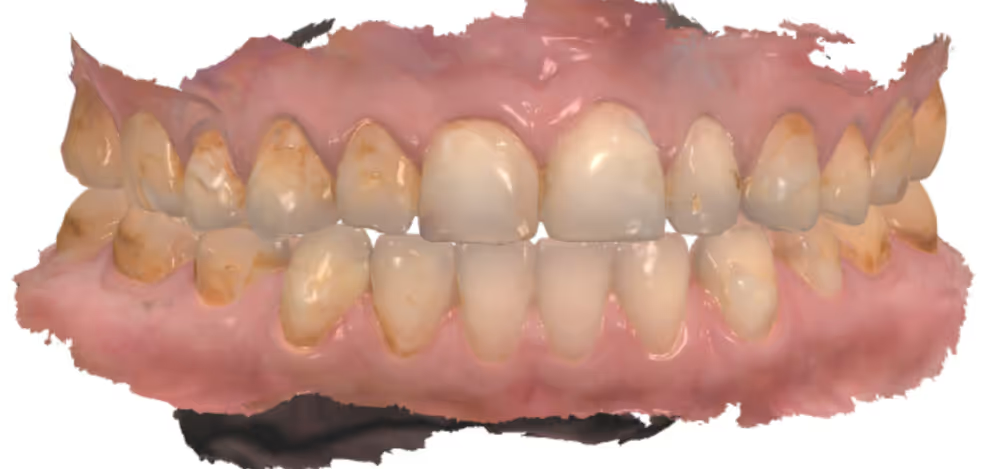
E
S
I
G
N
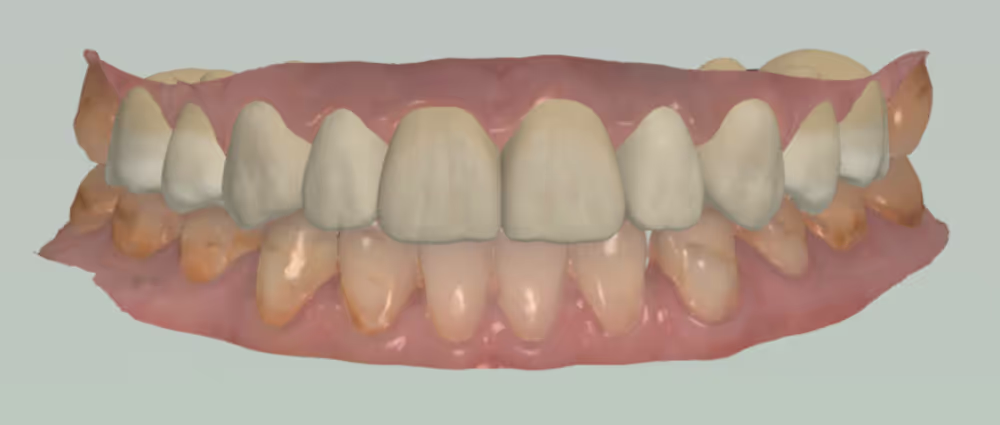
I
N
A
L
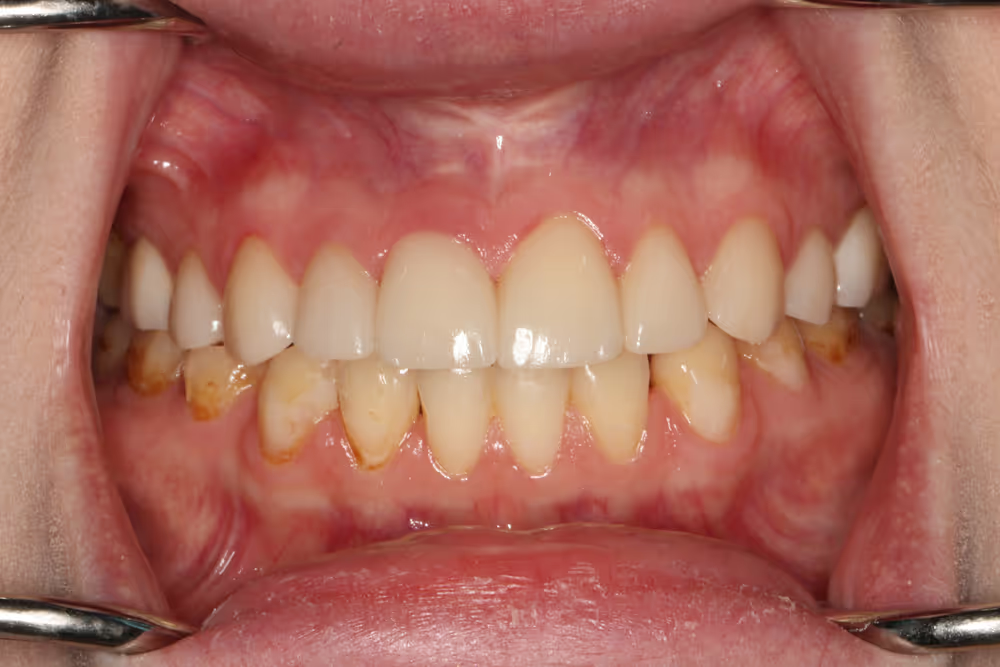
.avif)
R
E
O
P
-
M
A
X
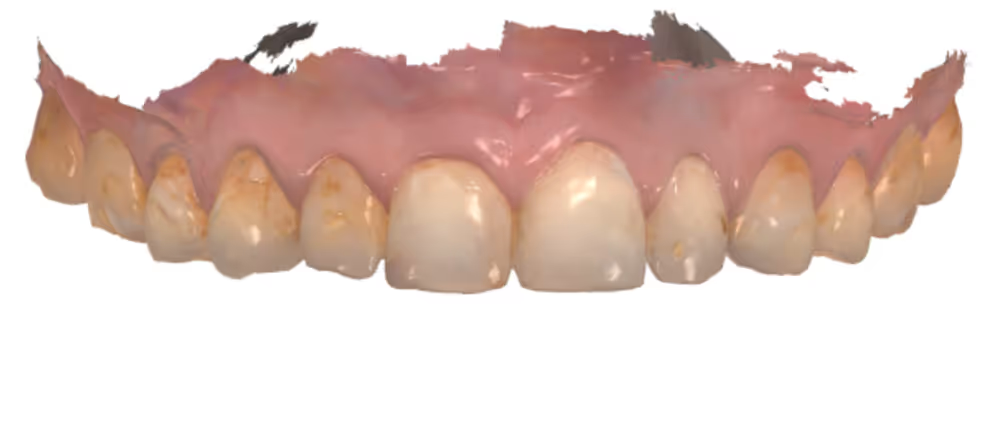
E
S
I
G
N
-
M
A
X
I
N
A
L
-
M
A
X
How Are Dental Surgical Guides Made?
At Bedford Center for Prosthodontics, surgical guides are designed through a fully digital workflow:
- CBCT Scan: A 3D cone beam CT image captures the patient's jaw anatomy, including bone density, nerve locations, and sinus position.
- Digital Impression: An intraoral scan or RayFace facial scan captures the surface anatomy of the teeth and soft tissue.
- Treatment Planning: The CBCT and digital impression are merged in specialized software, where Dr. Connolly virtually plans each implant position based on the planned final restoration (prosthetically-driven planning).
- Guide Design: Once the implant plan is finalized, a custom surgical guide is designed to match the patient's anatomy with sleeves that direct the drill to each exact position.
- 3D Printing: The guide is 3D-printed in biocompatible resin and ready for use at the surgical appointment.
Why Use a Surgical Guide for Dental Implants?
Surgical guides are considered the standard of care for precise, predictable implant placement — especially in complex cases. The benefits include:
- Safety: Nerves, sinuses, and adjacent tooth roots are avoided by design.
- Accuracy: Studies show guided implant placement achieves within 1mm of planned position.
- Aesthetics: Implants are placed to support the ideal crown, bridge, or full arch — not the other way around.
- Reduced chair time: Planning happens before surgery, making the procedure faster.
- Less post-op discomfort: Flapless guided surgery means less swelling and faster healing.
Are Surgical Guides Necessary for Every Implant Case?
While a skilled implant surgeon can place straightforward implants freehand, surgical guides are especially critical for:
- Full arch restorations (All-on-4, All-on-6)
- Cases with limited bone volume
- Implants placed near the sinus or inferior alveolar nerve
- Aesthetic zone implants (front teeth)
- Multiple implants requiring parallel alignment
Dr. Connolly uses custom surgical guides for nearly all dental implant cases as part of our commitment to precision and predictable results.
Surgical Guides at Bedford Center for Prosthodontics
Most general dental practices that offer implants either place them freehand or outsource the surgical guide design to a third-party lab. At Bedford Center for Prosthodontics, the entire workflow happens under one roof — and is overseen personally by Dr. Paul Connolly, an expert prosthodontist with three additional years of specialist residency training in complex implant restoration.
Here's what that means for patients considering dental implants in Bedford, NH:
- Specialist-led planning: Dr. Connolly personally maps every implant position using CBCT imaging and RayFace 3D facial scanning — not a remote technician working from your file.
- Prosthetically-driven design: As a prosthodontist, Dr. Connolly designs the final teeth first, then places the implants to support that ideal restoration. This is the opposite of how most general practices approach implant cases.
- In-house 3D printing: Custom guides are designed and produced on-site, which means faster turnarounds and the ability to refine plans without weeks of lab back-and-forth.
- Coordinated surgical and restorative care: The same specialist who designs your final crown, bridge, or full arch restoration oversees the surgical placement — eliminating handoffs and miscommunication between providers.
This level of integration is why patients across Bedford, Manchester, Merrimack, and surrounding New Hampshire towns choose specialist-led implant care over general dentistry alternatives.
Schedule a Consultation with Dr. Connolly
If you are considering dental implants — whether a single tooth, a multi-tooth bridge, or a full arch — the planning process begins with a comprehensive consultation, CBCT imaging, and a custom treatment plan. Call 603-625-6456 or request an appointment online to see how guided implant planning works in person at our South River Road office.
.avif)
Frequently Asked Questions About Dental Surgical Guides
What is a dental surgical guide?
A dental surgical guide is a custom-made template, typically 3D-printed from biocompatible resin, that fits over a patient's teeth or gums to direct the exact position, angle, and depth of each dental implant during surgery. It translates the digital implant plan into precise placement at the appointment.
How accurate are surgical guides for dental implants?
Fully guided dental implant placement achieves accuracy within approximately 1 millimeter of the planned position and within 2 to 4 degrees of planned angulation. This is significantly more precise than freehand placement and is considered the standard of care for complex implant cases.
What is a surgical guide used for in dentistry?
A surgical guide is used to control the exact angle, depth, and position of each dental implant during placement. It allows the surgeon to avoid nerves and sinuses, support the planned final restoration, reduce surgery time, and enable minimally invasive, often flapless implant placement.
How is a dental surgical guide made?
A dental surgical guide is made through a digital workflow: a CBCT scan captures jaw anatomy, a digital impression captures the teeth and gums, software merges both to plan implant positions, and the guide is then 3D-printed in biocompatible resin with metal sleeves that direct the surgical drill.
Are surgical guides necessary for all dental implants?
Not for every case, but surgical guides are strongly recommended for complex situations. These include full arch restorations (All-on-4, All-on-6), cases with limited bone, implants placed near nerves or sinuses, front-tooth aesthetic implants, and any case requiring precise parallel alignment of multiple implants.
What is a surgical guide for All-on-4 implants?
A surgical guide for All-on-4 is a custom template that directs the precise placement of all four implants used to support a full arch restoration. Because the four implants must work together to support an entire prosthetic arch, even small angulation errors can compromise the outcome — making a guide essential.
How much does a dental implant surgical guide cost?
Surgical guides are typically included in the overall cost of implant placement rather than billed separately. The guide is part of the digital planning and surgical fee for the implant procedure itself. We provide transparent, itemized pricing during your consultation at Bedford Center for Prosthodontics.
How long does it take to make a surgical guide?
From CBCT scan to finished surgical guide typically takes one to two weeks. At Bedford Center for Prosthodontics, in-house 3D printing allows us to turn around guides faster than practices that outsource fabrication, which can shorten the time between consultation and implant surgery.
.avif)