
All-on-4 & Full Arch Dental Implants in Bedford, NH
.avif)
Permanent Teeth in a Day with Full Arch Dental Implants
Full arch implant restoration — also known as All-on-4, All-on-6, or All-on-X — replaces an entire arch of missing or failing teeth using just four to six dental implants. Rather than replacing teeth one at a time, a full arch of permanent, natural-looking teeth is anchored securely to implants placed in the jawbone. With the Teeth in a Day approach at Bedford Center for Prosthodontics, most patients leave our Bedford, NH office with a complete, functional smile the same day as their surgery.
Full arch restoration is one of the most complex and life-changing procedures in dentistry — and it's a core focus of Dr. Paul Connolly's specialist training. As a prosthodontist with three additional years of residency training beyond dental school, Dr. Connolly designs the final teeth first, then plans the implant placement to support that ideal result — the level of precision that full arch cases demand.
What Is All-on-4 / All-on-X?
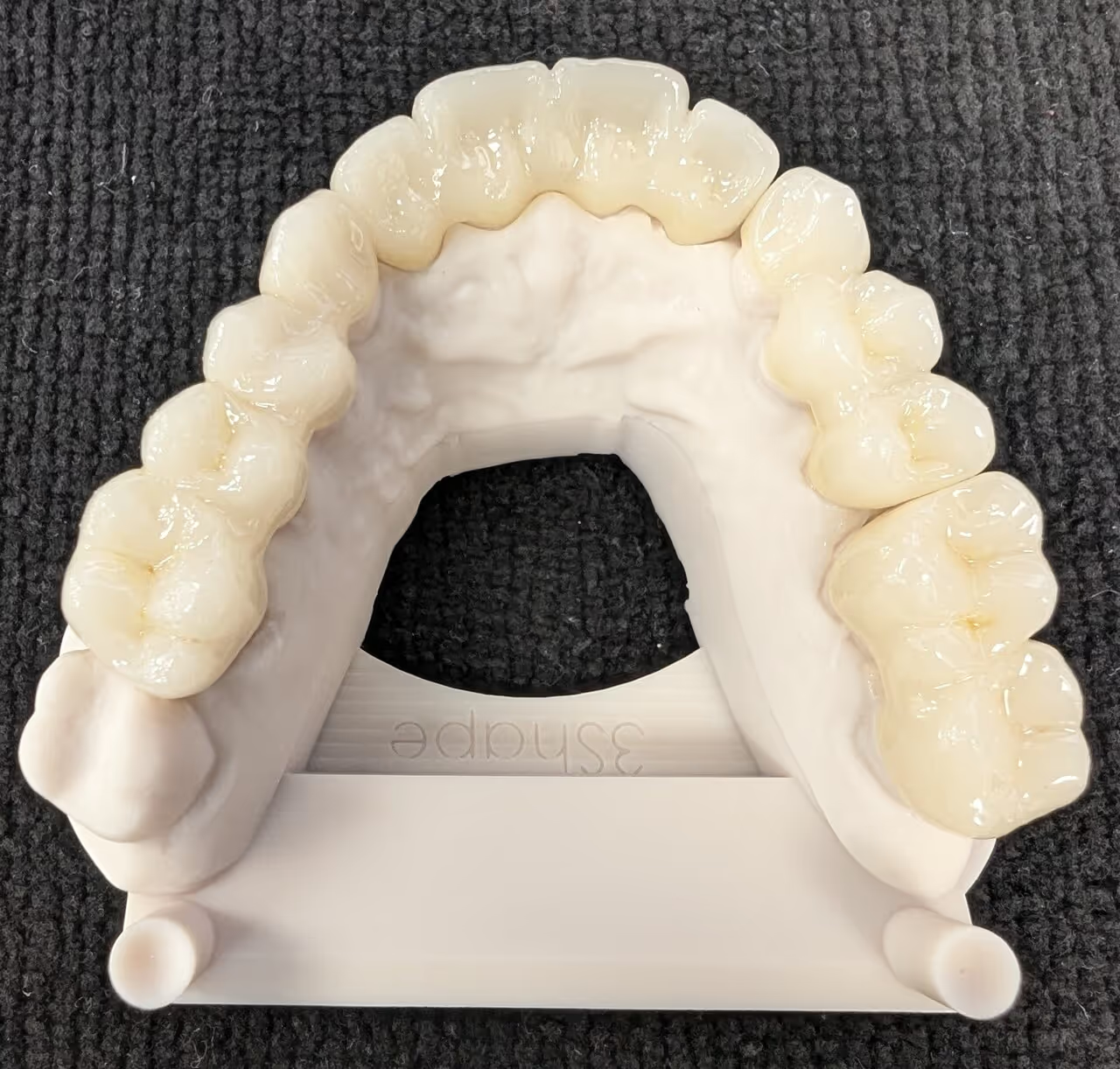
All-on-4 (and its variations All-on-6 and All-on-X) is a technique that replaces a full arch of teeth using as few as four strategically placed dental implants as a permanent foundation. Unlike traditional dentures that rest on the gums and can slip, a full arch restoration is fixed in place — it looks, feels, and functions like natural teeth.
The two most common configurations are:
- All-on-4: Four implants per arch — two placed vertically in the front of the jaw and two angled in the back to maximize contact with available bone. Ideal for many patients, including those with some bone loss.
- All-on-6: Six implants per arch for added stability and support, often recommended for the upper arch or patients with stronger bone density.
During your consultation, Dr. Connolly determines which configuration best fits your anatomy, bone density, and goals using advanced 3D imaging.
Permanent Teeth in a Day
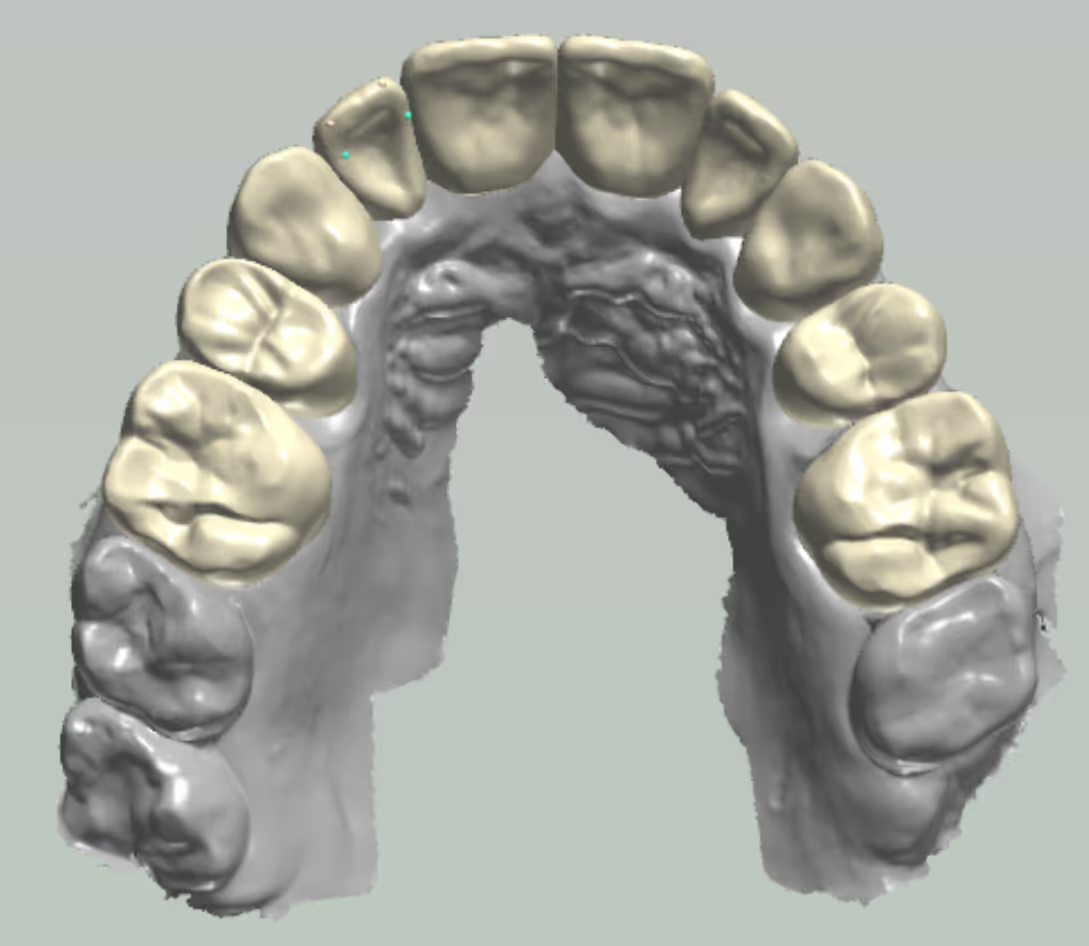
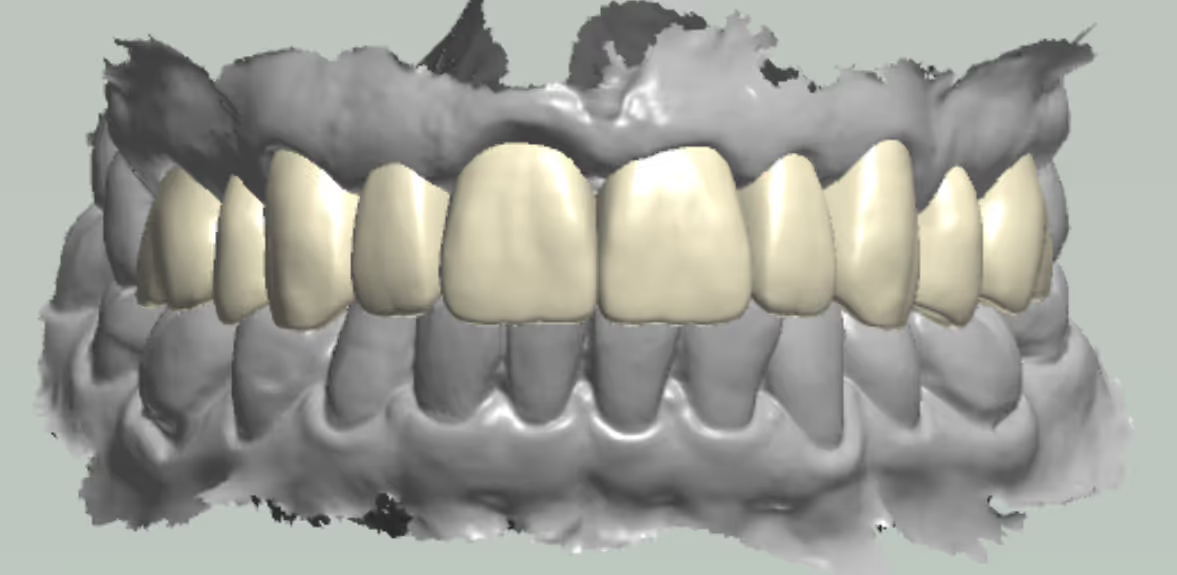
One of the most remarkable aspects of full arch restoration is the Teeth in a Day protocol. In many cases, you can walk into our Bedford office with failing or missing teeth and leave the same day with a fixed, functional set of teeth.
Here's how it's possible: because the implants are placed and a prefabricated arch is attached during the same appointment, you don't spend months without teeth. Over the following three to six months, the implants fuse permanently with your jawbone (a process called osseointegration), after which your final, custom-crafted permanent arch is placed.
This means immediate transformation on day one, and a permanent, lasting result once healing is complete.
The Prosthodontist Advantage for Full Arch Cases
Full-mouth restoration is one of the most complex procedures in dentistry, and the provider you choose directly impacts your long-term results. As a prosthodontist, Dr. Connolly completed three additional years of advanced residency training focused exclusively on restoring and replacing teeth — including the specific challenges of full arch cases.
That specialist training matters because a successful full arch restoration depends on far more than placing implants. It requires expertise in:
- Complex bite alignment (occlusion): Ensuring the new arch functions correctly against the opposing teeth for comfortable, lasting results
- Facial aesthetics and smile design: Designing teeth that complement your unique facial proportions, midline, and lip line
- Full-mouth rehabilitation: Coordinating the entire restoration as a unified system, not a collection of parts
- Long-term durability: Planning for a result built to last decades, not just to look good on day one
Unlike general dentists, Dr. Connolly approaches every All-on-X case with a comprehensive understanding of how your teeth, jaw, and facial structure work together — designing the final result first, then planning the implants to support it.
Designed for Your Face, Not Just Your Mouth
Using advanced RayFace 3D facial scanning, we create a digital model of your face to design a smile that complements your natural features. This ensures your final result looks balanced, natural, and uniquely yours — not generic. Combined with Cone Beam CT (CBCT) imaging and custom surgical guides, every implant is planned and placed with precision.
The Full Arch Procedure: What to Expect
Step 1: Digital Diagnostics and Planning
We begin with detailed planning using Cone Beam CT (CBCT) scans and RayFace technology. This allows Dr. Connolly to evaluate your bone structure, map precise implant placement, and design your new smile before treatment begins.
Step 2: Guided Implant Surgery
Using custom surgical guides, the implants are placed with a high degree of accuracy. Guided surgery minimizes discomfort, improves healing time, and supports long-term stability. Sedation options are available for a comfortable experience.
Step 3: Same-Day Transformation (Teeth in a Day)
In many cases, you'll leave the office the same day with a fixed, functional set of teeth — which is why the procedure is often called Teeth in a Day.
Step 4: Healing and Final Restoration
Over the following months, your implants integrate with your jawbone, creating a strong, lasting foundation. Once healing is complete, your permanent, custom-designed final arch is placed.
Full Arch Implants vs. Traditional Dentures
Many patients considering full arch restoration are currently wearing — or trying to avoid — traditional dentures. Here's how the two compare:
- Stability: Full arch implants are fixed permanently in place. Traditional dentures rest on the gums and can slip or shift.
- Bone health: Implants stimulate the jawbone and help prevent the bone loss (and "sunken face" appearance) that occurs with long-term denture wear.
- Chewing power: Full arch restorations restore nearly 100% of natural chewing function, allowing you to eat the foods you love. Dentures typically restore far less.
- Convenience: No adhesives, no removal for cleaning, no dietary restrictions — full arch teeth are cared for like natural teeth.
- Confidence: Fixed teeth eliminate the worry of dentures slipping while eating, speaking, or laughing.
For patients who want a removable option or aren't candidates for a fixed restoration, implant-supported dentures offer a middle-ground solution that combines implant stability with the familiarity of a denture.
Am I a Candidate for Full Arch Implants?
Most adults missing most or all of their teeth in an arch — or facing the failure of their remaining teeth — are candidates for full arch restoration. Key factors include:
- Jawbone density: Adequate bone is needed to anchor the implants. If bone has been lost, bone grafting can often build a strong foundation. A CBCT scan determines exactly what your bone can support.
- Overall health: Most systemic conditions, including diabetes and heart conditions, don't prevent treatment when properly managed.
- Age: There is no upper age limit. Many patients in their 70s and 80s successfully receive full arch restorations.
- Current denture wearers: If you wear dentures and are frustrated by slipping, discomfort, or dietary limits, you are very likely a candidate for a fixed full arch solution.
Cost and Financing
The cost of full arch implant restoration varies based on the number of implants needed, whether preliminary work like extractions or bone grafting is required, and the materials selected for your final arch. During your consultation, we provide a transparent, itemized estimate rather than a vague range.
Because full arch restoration is a significant investment in your long-term health and quality of life, we offer flexible payment options to make treatment accessible. Our team will also help you understand any insurance benefits that may apply.
Frequently Asked Questions (FAQs)
Is full arch implant restoration painful?
Most patients report far less discomfort than expected. The procedure is performed with local anesthesia, and sedation options are available. Because guided surgery is minimally invasive, post-operative discomfort is typically manageable with standard pain relief, and most patients return to normal activities within a few days.
How long do All-on-4 / All-on-X implants last?
With proper care, the implants themselves are designed to last a lifetime. The prosthetic arch attached to them typically lasts many years before it may need replacement due to normal wear. Regular hygiene visits and good home care are essential for long-term success.
What is the recovery time for full arch implants?
Most patients return to normal daily activities within a few days of surgery. Full healing, during which the implants fuse with the jawbone, takes three to six months — but you'll have a functional set of teeth throughout this period thanks to the Teeth in a Day approach.
Am I a candidate if I currently wear dentures?
Very likely, yes. Full arch restoration is one of the most popular solutions for denture wearers frustrated by slipping, discomfort, or dietary restrictions. A consultation and CBCT scan will confirm whether you have adequate bone or would benefit from grafting first.
How does All-on-4 differ from traditional dentures?
All-on-4 implants are permanently fixed to the jawbone, while traditional dentures rest on the gums and are removable. All-on-4 prevents bone loss, restores far more chewing power, requires no adhesives, and eliminates the slipping and discomfort associated with conventional dentures.
How many teeth are on a full arch restoration?
A full arch restoration typically replaces an entire arch of 10 to 14 teeth, all supported by just four to six implants. The exact number is designed to fit your mouth, bite, and aesthetic goals.
Can I get full arch implants on both the top and bottom?
Yes. Many patients restore both the upper and lower arches, either at the same time or in stages. Dr. Connolly will discuss the best approach for your specific situation during your consultation.
.avif)